Mexican tuna producer says juvenile catch incidence fell below 5% as it advances fishery improvement project, emissions reductions and animal welfare initiatives
Baja California, Mexico — Baja Aqua Farms reported a significant reduction in the incidence of juvenile Pacific bluefin tuna catch in 2025, alongside improvements in emissions intensity, energy use, mortality and fisheries monitoring, according to the company’s newly released 2025 Sustainability Report.
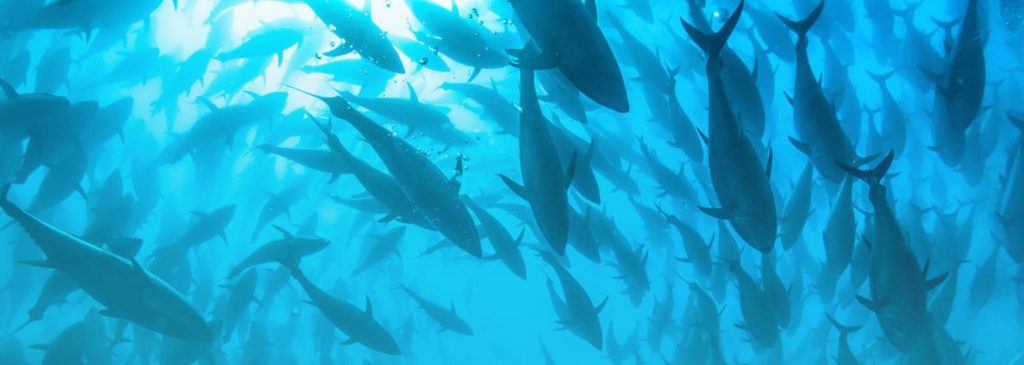
The company said juvenile catch incidence fell below 5% in 2025, representing a reduction of more than 90% compared with 2024. The average size of harvested fish also exceeded 70 kilograms.
The change marks a notable shift from the previous year, when 49% of captured fish were below 30 kilograms, according to Baja Aqua Farms.
The company attributed the improvement in part to changes in the sizes of Pacific bluefin tuna stocked into its operations and improvements in fishery management.
“Sustainability is not a destination. It is the way we choose to operate every day,” said Manuel Vázquez, CEO of Baja Aqua Farms Group.
“Our responsibility extends beyond the product itself. It includes protecting the ecosystems we depend on, supporting the people and communities connected to our operations, and continuously improving how we operate.”
The company’s 2025 report covers fisheries management, environmental performance, animal health and welfare, food safety, traceability, workforce development and community investment.
FIP moves forward
One of the most significant developments during 2025 was the formal registration of Baja Aqua Farms’ Pacific Bluefin Tuna Fishery Improvement Project under the Marine Stewardship Council framework.
The FIP is intended to establish a structured process for improving sustainability, transparency and traceability within the fishery while creating a pathway toward independent assessment.
Baja Aqua Farms expects to receive its first official FIP progress rating in the third quarter of 2026. The company also expects to undergo the Announcement Comment Draft Report process during 2026 as it evaluates pursuit of Marine Stewardship Council certification for the Mexican Pacific bluefin tuna fishery.
The company has set an objective of achieving certification by the second quarter of 2028.
The development comes as bluefin tuna fisheries continue to face scrutiny around stock management, catch composition and traceability. For Baja Aqua Farms, the FIP is intended to provide a formal framework through which progress can be documented and assessed.
AI enters tuna monitoring
Technology is also becoming part of the company’s approach to fisheries management.
Baja Aqua Farms has continued development of an artificial intelligence system in collaboration with a Croatian technology company designed to estimate tuna abundance and biomass in real time.
Following validation and refinement, the system achieved an estimated 2% error margin, according to the company.
The technology is intended to provide another source of information for monitoring tuna populations and supporting operational decision making, while contributing to traceability efforts.
For an industry increasingly focused on demonstrating the origin, movement and management of seafood products, the ability to combine operational data with technology could become an increasingly important part of fisheries management.
Lower emissions and energy intensity
Baja Aqua Farms also reported reductions in the environmental intensity of its operations.
Emissions intensity declined 15.4% from 2024 levels, contributing to a cumulative 21.8% reduction in emissions intensity.
Energy intensity within the organization decreased 24.5%, while total energy intensity within and outside the organization declined 32.5%.
The company continued environmental monitoring around its operations, including routine seabed inspections near the Coronado Islands and efforts to reduce feed loss.
Baja Aqua Farms said the measures are part of a broader effort to understand and manage the environmental impacts associated with its operations while protecting the marine ecosystems on which its business depends.
Mortality falls 66%
Animal health and welfare were another area of measurable improvement in 2025.
Baja Aqua Farms reported mortality of 2.53%, down from 7.43% in 2024, representing a 66% reduction.
The company attributed much of the improvement to larger fish being stocked and lower mortality during harmful algal bloom events.
The company said its farm teams use predictive indicators to identify potential harmful algal bloom conditions and respond earlier to changing environmental conditions.
Daily mortality inspections, water-quality monitoring and harmful algal bloom monitoring form part of the company’s routine animal-health practices.
Baja Aqua Farms also conducts weekly net cleaning using remotely operated vehicles and support vessels.
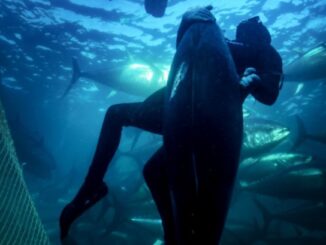
At harvest, the company uses the Japanese Ikejime method and does not rely on asphyxiation, CO2 stunning or ice chilling.
Local workforce and education
The company’s sustainability report also tracks its impact on the local workforce.
Baja Aqua Farms employed 371 people in 2025, with 32% hired from communities near its operations in Baja California.
The company reported that 90% of employees returning during fishing season have worked with the company within the previous 10 years.
Baja Aqua Farms also maintains three higher-education collaboration agreements in Ensenada supporting internships and professional residencies.
The programs are intended to give local students practical experience while helping develop talent for the aquaculture sector.
Traceability and food safety
Food safety remains an important component of Baja Aqua Farms’ vertically integrated model.
Baja Marine Foods, part of Baja Aqua Farms, is authorized by Mexico’s COFEPRIS to export to the European Union and other Codex markets and undergoes annual audits.
The processing facility has maintained Best Aquaculture Practices Seafood Processing Standard certification since 2023. During 2025, the company reported a 100% reduction in critical nonconformities and a 33.3% reduction in both major and minor nonconformities.
The company also maintains Kosher and Halal certifications, along with Friend of the Sea and Dolphin Safe certifications for its tuna fisheries.
Baja Aqua Farms’ 2025 Sustainability Report was prepared with reference to the GRI Standards 2021 and aligned with the GRI 13 Agriculture, Aquaculture and Fishing Sectors Standard.
The company said the report is intended to provide measurable evidence of progress rather than focus solely on commitments.
“Our responsibility extends beyond the product itself,” Vázquez said. “It includes protecting the ecosystems we depend on, supporting the people and communities connected to our operations, and continuously improving how we operate.”
For Baja Aqua Farms, the next phase will include continued FIP development, fisheries assessment, environmental monitoring, technology validation and progress toward its 2028 MSC certification objective.